
The Ultimate Guide to the Balance Sheet: Structure, Importance, and GST Integration
In the modern Indian economic landscape, staying “burdenless” (as we aim for at GST Jan Suvidha Kendra) requires more than just filing a return; it requires a deep understanding of your financial position. Whether you are a small shopkeeper, a seasonal businessman, or a large enterprise with a turnover exceeding 40 lakhs, the Balance Sheet is your financial DNA.
1. What is a Balance Sheet?
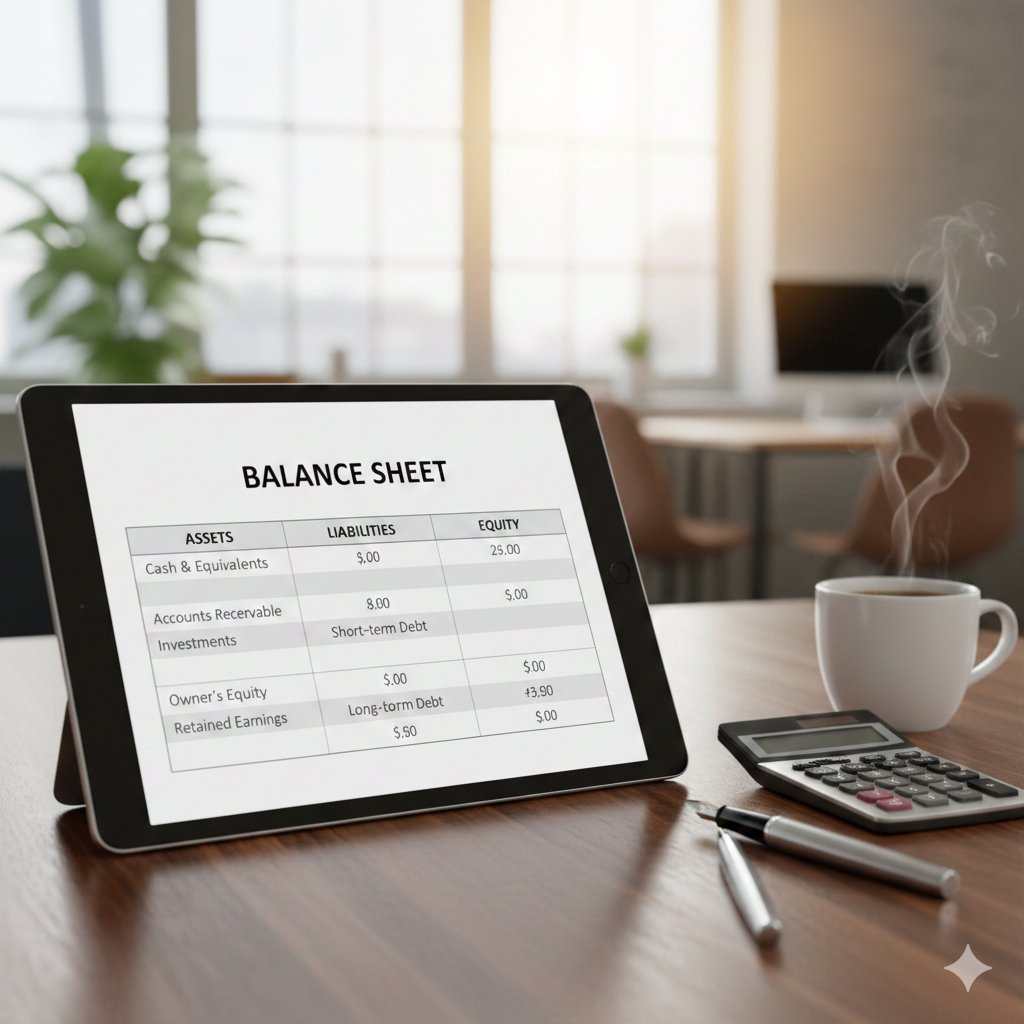
A Balance Sheet is a financial statement that reports a company’s assets, liabilities, and shareholder equity at a specific point in time. It is based on the fundamental accounting equation:
Assets = Liabilities + Equity
It provides a “snapshot” of what your business owns and owes. While the Profit & Loss (P&L) statement tells you how much money you made over a period, the Balance Sheet tells you how much your business is worth on a specific date (usually March 31st in India).
2. The Core Components of a Balance Sheet
A. Assets (What You Own)
Assets are resources owned by the business that have future economic value.
- Current Assets: Assets expected to be converted into cash within one year.
- Cash and Bank Balances: Money in your business account.
- Inventory/Stock: The goods you have ready for sale.
- Accounts Receivable (Sundry Debtors): Money customers owe you for goods sold on credit.
- GST Input Tax Credit (ITC): This is a crucial asset. It represents the tax you’ve paid on purchases that you can use to offset your output tax liability.
- Fixed Assets (Non-Current): Long-term investments.
- Property, Plant, and Equipment (PPE): Your office space, computers, and scanners used for your GST Suvidha Center.
- Intangible Assets: Trademarks or software licenses.
B. Liabilities (What You Owe)
Liabilities are obligations the business must settle in the future.
- Current Liabilities: Debts due within one year.
- Accounts Payable (Sundry Creditors): Money you owe to suppliers.
- Short-term Loans: Interest and principal due soon.
- GST Payable: The tax collected from customers that has not yet been deposited with the government.
- Non-Current Liabilities: Long-term debts like bank loans (Mudra Loans) or mortgages that are paid over several years.
C. Equity (Owner’s Capital)
This is the residual interest in the assets after deducting liabilities. It includes the initial investment made by the entrepreneur and the retained earnings (profits kept in the business).
3. The Role of the Balance Sheet in GST Compliance
At GST Suvidha Center (WB 093), we emphasize that a clean Balance Sheet is the backbone of a smooth GST audit.
- Reconciliation of ITC: The GST department often checks if the “Input Tax Credit” shown in your Balance Sheet matches the electronic credit ledger on the GST portal.
- Turnover Verification: Your total sales reported in GST returns (GSTR-1 and GSTR-3B) must align with the revenue figures that eventually impact your Equity and Asset accounts.
- Liability Tracking: Ensuring your “GST Payable” account in the Balance Sheet is cleared regularly prevents interest penalties and legal overburdens.
4. How to Prepare a Balance Sheet (Step-by-Step)
For those without technical knowledge, this process can be daunting. Here is how our experts at the Budge Budge Franchisee Office approach it:
- Trial Balance Preparation: We list all your ledger balances.
- Adjusting Entries: We account for depreciation on your equipment (like the computers and printers used in your shop) and accrued expenses.
- Classifying Assets and Liabilities: Separating long-term commitments from daily operational costs.
- Verification: Ensuring the total of the left side (Assets) perfectly matches the total of the right side (Liabilities + Equity).
5. Why Every Business Needs an Accurate Balance Sheet
I. Securing Loans (Mudra & Business Loans)
As an authorized Mudra Loan application provider, we know that banks look at your Balance Sheet first. They check your Debt-to-Equity Ratio to see if your business is over-leveraged. If your assets significantly outweigh your liabilities, your chances of loan approval at 0% interest or low rates increase.
II. Attracting Investors or Partners
If you are looking to expand your franchise or bring in a partner, they need to see the “Book Value” of your business. A healthy balance sheet shows stability.
III. Tax Planning and Audit
Under the Income Tax Act, businesses above a certain turnover must undergo a Tax Audit. A well-maintained balance sheet ensures that you aren’t paying more tax than necessary by properly accounting for expenses and depreciation.
6. Common Mistakes in Small Business Balance Sheets
- Mixing Personal and Business Expenses: Small shopkeepers often use business cash for personal use without recording it as “Drawings.”
- Ignoring Depreciation: Not reducing the value of your machinery or computers over time leads to an inflated (and incorrect) asset value.
- Mismatched GST Entries: Failing to record GST refunds or pending liabilities correctly.
7. Professional Assistance: The PC Achary Advantage
Our mission at gsc.pcachary.in/ is to take the “intense burden” off your shoulders. Preparing a Balance Sheet isn’t just about math; it’s about legal compliance.
- Experienced Team: With a backend team of 170+ members, we ensure every entry is double-checked.
- Affordable Rates: We provide CA-level certification and bookkeeping at “nominal rates” so that even the smallest trader can stay organized.
- One-Stop Shop: From GST registration to final Balance Sheet preparation and Income Tax Audit, we handle it all in one destination.
Conclusion: Your Financial Health Checklist
To keep your business under “high profits” and remain “burdenless,” you should review your Balance Sheet at least quarterly. Don’t wait for March 31st to discover your business is in debt.
Are you ready to professionalize your business accounts?
Contact Purna Chandra Achary (Branch Code: WB 093) today for a personalized consultation.
- WhatsApp: Connect Now
- Email: connect@pcachary.in
- Website: https://gsc.pcachary.in/
Disclaimer: This document is for informational purposes. For legal financial filing, please consult with our authorized GST professionals at our Budge Budge or Dwarka offices.